Why isn't there a place I could find more solutions?
2026 has been an exciting year for an amateur footballer: She made it to Div 3. Then there was the Women's Asian Cup, and then there was the FIFA World Cup 2026. After all the hype, she sat in a quiet room reflecting on the lows and highs of the year... especially the lows, like ACL injuries, concussion, yelling and brawls on the pitch. Then a flash of thought went over her head: 'Science and tech is changing sports so much. Why isn't there a place I could find more solutions? Like, a platform focused on sports, science and technology?'
2026-07-29·8 min read·Wearables & Recovery
1 · Editor's note
This year was full of football for me.
Getting to know a friend's relative, an NPL soccer player, Finn Ballard McBride, I watched NW Spirit FC's preseason game in February — watching a football game first-hand for the first time in... probably ever, brought back my own childhood memory of playing soccer on the school sand ground, with no refs or coaches but other kids of my age at 8–12. The next morning I lazily woke up and scrolled Instagram in my bed, and came across a post promoting a pre-season Div 1–4 football team trial at my university... which was literally starting in about an hour. I thought about it for 5 minutes, then got up and ran toward the nearest shopping centre to get my first ever football boots on, and then ran to the field. After weeks, the announcement that I got into Div 3. Then there was the Women's Asian Cup, and then there was the FIFA World Cup 2026. There is so much exciting stuff to talk about, but I'll zoom in on just one topic in this post.
Concussion.
I saw it over and over again — in my own Div 3 games and on TV — that Indian goalkeeper at the Asian Cup, I hope she's ok, and, quite recently, myself, when I bumped headfirst into the opponent player running at full speed, then boom, I was on the ground with tinnitus, people looking down at me from every angle.
Football is statistically one of the worst sports for concussion, and girls more so than boys. Unfortunately there is a prevalent lack of adequate safety measures in lower divisions.
There's gotta be something we can do — a better protection. I found Storelli headgear; it seems like the only brand on the market at the moment that is properly tackling this issue. Though they say 'can't guarantee effectiveness to concussion — it's proven effective for head injuries, not concussion', interesting challenge to solve.
Then there are other injuries: ACL, shin splints, ankle sprain, neuroma...
Then there's soccer boots. The topsides are getting thinner for better touch, but crushing weights (and many players still wearing metallic studs) stepping onto the top of foot is really common and it really really hurts — I thought about designing a footguard for this matter, and came across multiple brands pursuing technologies for better protection. Could use a 3D printer, or just a flat piece of plastic might work?
Then there's 3D printing: personalized design of shoes, light material.
And injury prevention gears: bands, tape, socks, shield, anklewear, kneewear...
Ah, and then there's computer vision: player tracking cameras like Veo and many different applications... tactical, media...
And then, being a woman, there's nature's cycle in play: hormone fluctuation, more injury prone during certain sections in a period, made me think of brands and products like FORMA, which could be like Fitbit + Flo.
We're living in an exciting world, and I found a lot of interesting products through ads on IG and TikTok, and my next thought naturally flew to 'science and tech is changing sports so much. Why isn't there a place I could find more exciting things like this: a platform focused on sports science tech?'
I quite digressed, but this is how SSMT began — it's my whole year of football obsession coming together into a platform for everyone.
— Ava, Sydney
2 · Top stories
Unevaluated
WHOOP — “You're Probably Training Too Hard (Or Not Hard Enough)”
on YouTube ↗
01
Your watch says rest today. We couldn't find one published test of that.
Unevaluateddrift 7/7
On the box
“Your readiness score tells you when to train hard and when to back off.”
0of 14 scores disclose how they are calculated
Your readiness score summarises things that genuinely matter — sleep, resting heart rate, HRV — and those inputs are measured reasonably well.
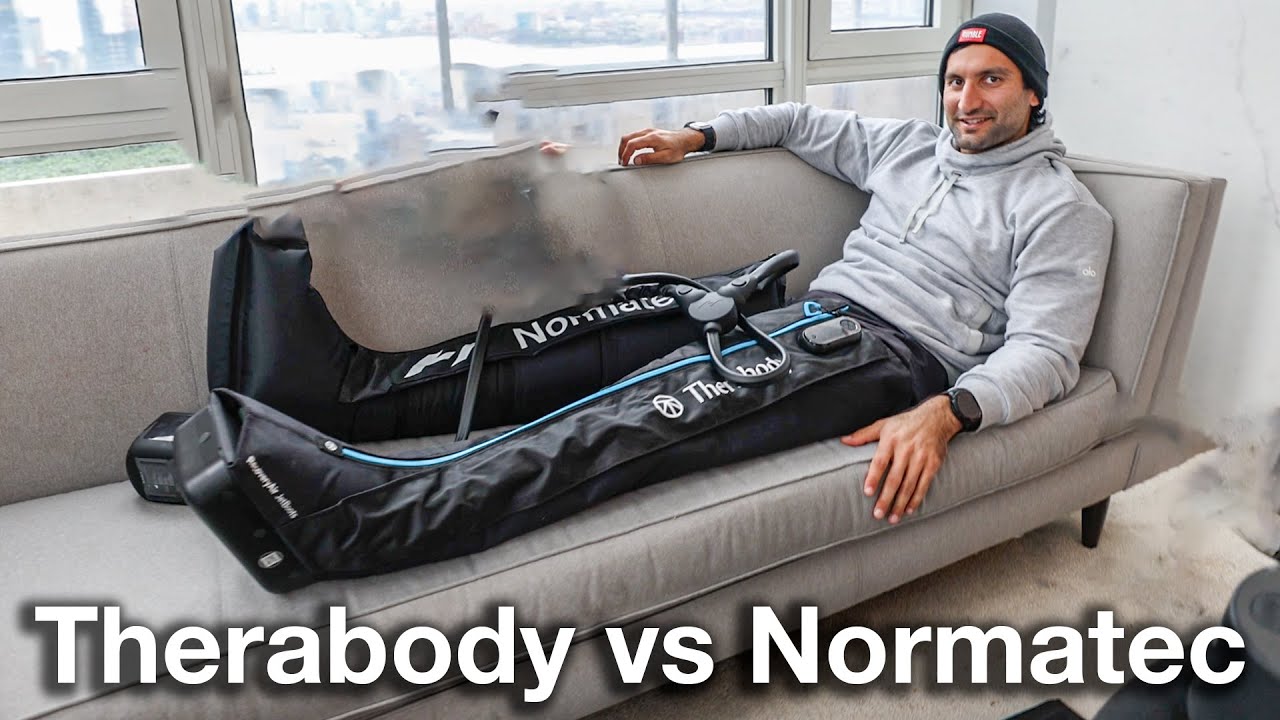
Shervin Shares — “I Tested the Best Compression Boots (Therabody vs Hyperice Normatec)”
on YouTube ↗
02
The boots make you feel better. Across 8 trials, nobody performed better the next day.
Partially supporteddrift 4/7
On the box
“Recover faster. Train harder tomorrow.”
0/8trials found you perform better the next day
Recovery boots reliably make people feel less sore for a day or so after hard training, and that is a real measured effect — not nothing, especially if feeling better keeps an athlete consistent.
Concussion, and what headgear can honestly be said to do
Headgear is the obvious answer to concussion in football. It is also the one place where the marketing, the lab and the pitch each say something slightly different, and the differences are worth laying out.
Start with the rate. In US high-school soccer data, girls' documented concussion risk was 1.88 times boys'. The mechanism differed too. Girls were most often injured by contact with the ball or a goalpost, 41.9% of cases. For boys the leading cause was another player, 48.4%.
That split matters more than it first appears. A padded band is designed for one kind of event: something hard meeting your skull. It can do very little about a shoulder arriving at speed. So the injuries that dominate the women's game are, on paper, exactly the ones headgear has the best case for.
Then there is what happened after the hit. Boys were 1.54 times more likely to be taken off immediately, and they returned two days sooner. Read that twice. The girls in this dataset were injured more often and removed from play less quickly.
Now the testing. Virginia Tech's Helmet Lab rates soccer headgear on "a headgear's ability to reduce linear and rotational acceleration of the head resulting from a range of head impacts a soccer player might see on the field." Those impacts happen on a rig, against an instrumented headform, under conditions the lab chooses. The lab is careful about what that buys you: "This analysis is based on data trends and probabilities, and therefore a specific person's risk may vary."
And then the product page, which is where the two worlds meet. Storelli's own listing carries both of these, within a few hundred pixels of each other: "May reduce head injury risk by up to 84%", and "There is NO conclusive data that the Storelli ExoShield Head Guard prevents CONCUSSIONS… the Storelli Head Guard does not, and is not designed to, prevent concussions."
Both statements can be true at the same time. One is about how much force reaches a headform on a test rig. The other is about whether a player gets concussed in a match. Nothing dishonest is happening in the gap between them, and the manufacturer is the one pointing at it. But the gap is real, and it is the whole question.
Crossing it needs a study that is genuinely hard to run: real match play, enough female players, enough seasons to count concussions rather than model them, and a comparison group who wore nothing. That is expensive, slow, and nobody selling headgear has an incentive to fund it.
Until it exists, the honest reading is narrow. A high-rated band means less force reached a headform under tested impacts. Whether that converts into fewer concussions across a season is the open question, and treating a rating as permission to head the ball more is the one inference the data cannot support.
Which quietly points somewhere cheaper. Nothing in the equipment evidence moves as much as that two-day gap in when players are pulled off and when they come back.
— SSMT desk
A sourced explainer, assembled by the desk from published evidence. It is not the editor's opinion piece — that is a different job, and the slot for it stays open.
4 · Research spotlight
The study that ran the plot twist
836 recreational runners, followed for six months. The runners with more asymmetry got hurt less, not more.Malisoux et al. (2024), BMJ Open Sport & Exercise Medicine — flight-time asymmetry, hazard ratio 0.80 (95% CI 0.64–0.99)
Intermittent pneumatic compression accelerates recovery and improves subsequent performance after exercise
What it claims
“Recover faster. Train harder tomorrow.”
Scope
Intermittent pneumatic compression devices, 20–30 minutes at 70–200 mmHg post-exercise.
Where it holds up
Accurate about how you feel; unsupported about what you can then do.
What would change our mind
An adequately powered (n≥100), sham-controlled, preregistered trial showing a significant between-group improvement in a hard performance outcome at 24–48h, replicated independently. Downward: two or three further well-blinded trials replic…
Resting heart rate and HRV are measured well. The readiness score built on top of them has never been tested as a training instruction by anyone independent.
Wrist heart rate is accurate at rest and steady running, and 10–20 bpm off in lifting, sprints and arm-driven work — worse for darker skin at high intensity.
Recovery boots reliably make you feel less sore. Across 8 trials, none showed you actually perform better the next day.
Sleep-stage breakdowns are a rough estimate, not a measurement — right about half to two-thirds of the time against a lab.
7 · Signal vs hype
Every verdict describes the state of located published evidence on a date — never a
company, never “it doesn't work”. Hype risk is how far the marketing has travelled past
what the study actually tested.
Topic
Signal
Hype risk
Verdict
Adjusting training according to a proprietary composite readiness score improves training outcomes compared with not using it
Wrist-worn photoplethysmography (PPG) wearables measure heart rate accurately during exercise
Medium
Low
Partially supported
Intermittent pneumatic compression accelerates recovery and improves subsequent performance after exercise
Medium
Medium
Partially supported
Prescribing training intensity by daily heart-rate variability produces better fitness or performance than a predefined fixed plan
Medium
Medium
Partially supported
8 · Product highlights
Editor's picks, not ads. Picked by the editor, not sold. Nobody here paid to appear, there are no affiliate links, and no money changes hands either way. Where we have graded a claim about one of these technologies the card is linked, including when the grade is unflattering.
ŌURA · their own clip
Recovery rings & strapsOura RingSmart ring tracking sleep, activity and readiness.
 Unevaluated